All Episodes:

[updated] The Incarnation and the Virgin Birth – The Roman Catechism – Episode 6

Today in The Catechism Series, we continue through the Creed with the mystery of the Incarnation: “Who was conceived by the Holy Ghost, born of the Virgin Mary.” Fr. Marcel Ockerse explains how the Son of God assumed a true human nature in the womb of Our Lady, while remaining what He was from all eternity. We’ll also look at why this work is attributed to the Holy Ghost, why Mary is truly the Mother of God, and what the Virgin Birth teaches us about humility, gratitude, and our own life of grace.

Read More

Abp. Lefebvre Audiobook: Episode 12 – Chapter 15: Charter of Resistance

In this release, Archbishop Marcel Lefebvre enters the postconciliar crisis with growing clarity and urgency. Chapter 15 shows him recognizing the deep confusion spreading through the Church after Vatican II: a crisis of authority, doctrine, catechism, religious life, and liturgy. No longer able to rely on official structures alone, he begins encouraging priests, bishops, writers, and lay movements who are trying to preserve the Faith. At the same time, the reform of the Mass accelerates, and Archbishop Lefebvre sees that the battle is no longer theoretical. The Church’s doctrine, worship, and priesthood are now directly at stake.

Read More

What Catholics Really Mean by Christ – The Roman Catechism – Episode 5

Today in The Catechism Series, we turn to the next article of the Creed and begin speaking about Our Lord Jesus Christ. Fr. Lukas Lipp explains the central truth that Christ is true God and true man: one divine Person with two complete natures. What does that actually mean? Why does the Church insist that Christ is not partly God and partly man, but fully both? And why does this doctrine matter for the Incarnation, the Redemption, and even the title of Our Lady as Mother of God?

Read More

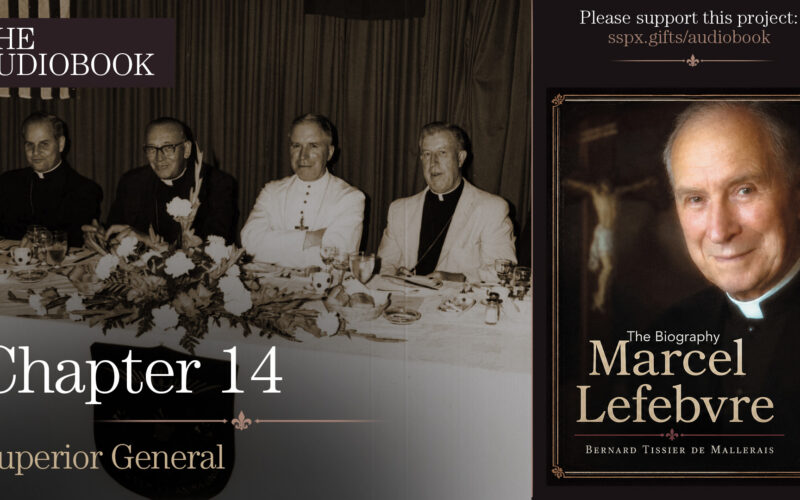
Abp. Lefebvre Audiobook: Episode 11 – Chapter 14: Superior General

In this release, Archbishop Marcel Lefebvre is elected Superior General of the Holy Ghost Fathers, taking charge of the congregation at a moment of deep confusion and rapid change. Chapter 14 shows him trying to strengthen doctrine, restore discipline, protect priestly and religious formation, and resist the spread of modernist ideas in seminaries and communities. Yet the same revolutionary spirit he had fought at the Council now appears within his own congregation. Despite his efforts to reform, organize, and preserve the missionary spirit of the Holy Ghost Fathers, opposition grows. By the end, he resigns, leaves the motherhouse with almost nothing, and begins to consider a new work: a traditional seminary.

Read More

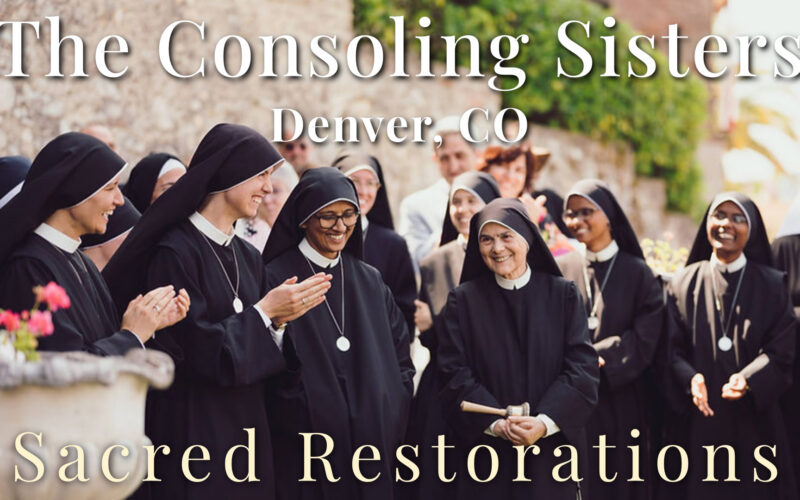
New Novitiate for the Consoling Sisters in Denver, CO – Sacred Restorations

The Sisters recount their early years of poverty, apostolic work, their perseverance through the crisis in the Church, and the providential path that eventually brought them into contact with Fr. Emmanuel du Chalard and the Society of Saint Pius X. It is a story of fidelity, hidden sacrifice, and the quiet restoration of religious life.

Read More

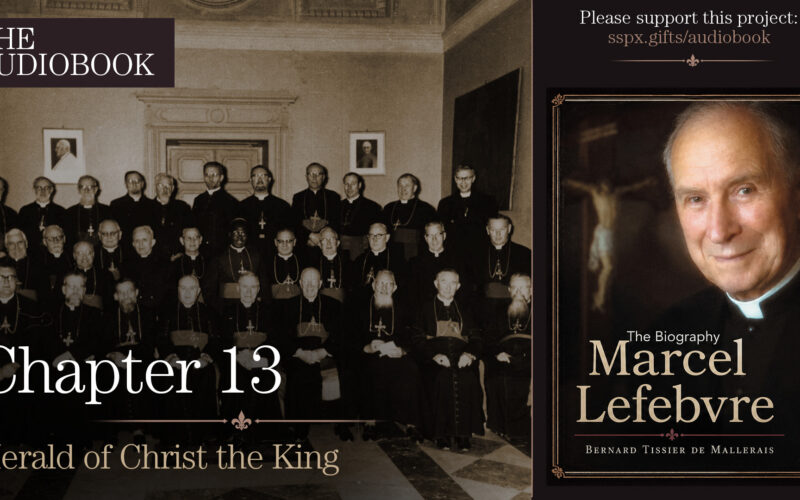
Abp. Lefebvre Audiobook: Episode 10 – Chapter 13: Herald of Christ the King

In this release, Archbishop Marcel Lefebvre steps forward as a public defender of Catholic tradition during the Second Vatican Council. Chapter 13 shows him repeatedly taking the floor, not out of a desire for controversy, but because he believed it was his duty to speak. He challenges the Council’s growing ambiguities on religious liberty, collegiality, ecumenism, the liturgy, and the Church’s relationship with the modern world. At the heart of his interventions is one great concern: that Christ the King must not be dethroned by a new religion centered on man, liberty, and worldly progress. This chapter reveals both his courage in the Council hall and his anguish as he sees the crisis beginning to unfold.

Read More

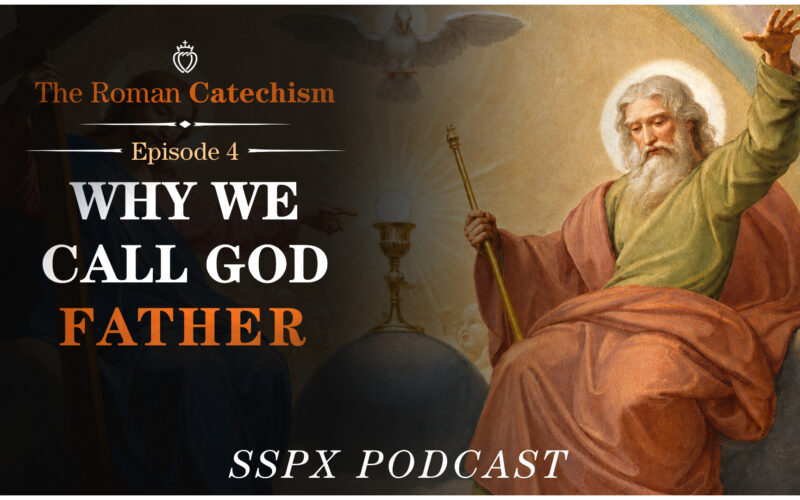
Why We Call God Father – The Roman Catechism – Episode 4

Today in The Catechism Series, we continue through the opening article of the Creed: “I believe in God, the Father Almighty, Creator of heaven and earth.” Fr. David Sherry explains what Catholics mean when they profess belief in God, not merely as a conclusion of reason, but as our first beginning and last end. We’ll also look at how God’s existence can be known, why we call Him Father, what it means that He is almighty, and how creation itself points us back to Him.

Read More

Abp. Lefebvre Audiobook: Episode 9 – Chapter 12: In the Turmoil of the Council

In this release, Archbishop Marcel Lefebvre enters one of the most consequential moments of his life: the Second Vatican Council. Chapter 12 follows him as a member of the Central Preparatory Commission, where he sees early signs of deep division within the Church over doctrine, liturgy, religious liberty, collegiality, Communism, and the social reign of Christ the King. As the Council begins, he becomes one of the leading figures in the Coetus Internationalis Patrum, a group of bishops working to defend Catholic tradition amid the growing influence of liberal and modernizing currents. This chapter shows Archbishop Lefebvre not as a spectator, but as a combatant in the great theological battles that would shape the Church’s future.

Read More

What Catholics Mean by Faith – The Roman Catechism #3

Today in The Catechism Series, we begin the first major section of the Roman Catechism: the Creed. But before looking at each article, Fr. David Sherry helps us understand the opening words: “I believe.” What does faith really mean? Why do we say “I believe” rather than simply “we believe”? And why is supernatural faith different from opinion, suspicion, doubt, or merely human trust? This episode lays the foundation for understanding the Creed as a personal profession of the truths revealed by God.

Read More

Abp. Lefebvre Audiobook: Episode 8 – Chapters 10 & 11: African Skirmishes / Tulle Interlude

In this release, Archbishop Marcel Lefebvre enters a new period of conflict and transition. In Chapter 10, we see his final years in Dakar, as Senegal moves toward independence and the Church faces difficult questions about Islam, socialism, inculturation, Catholic Action, and the future of Africa. Through it all, he remains steady: courteous and practical, but unwilling to compromise Catholic truth. Then, in Chapter 11, he is sent to the small French diocese of Tulle, where he finds a Church weakened by decline, discouragement, and confusion. Yet even there, in only a few months, he encourages priests, defends sound Catholic action, and begins planning renewal — before being called again to a much larger responsibility.

Read More